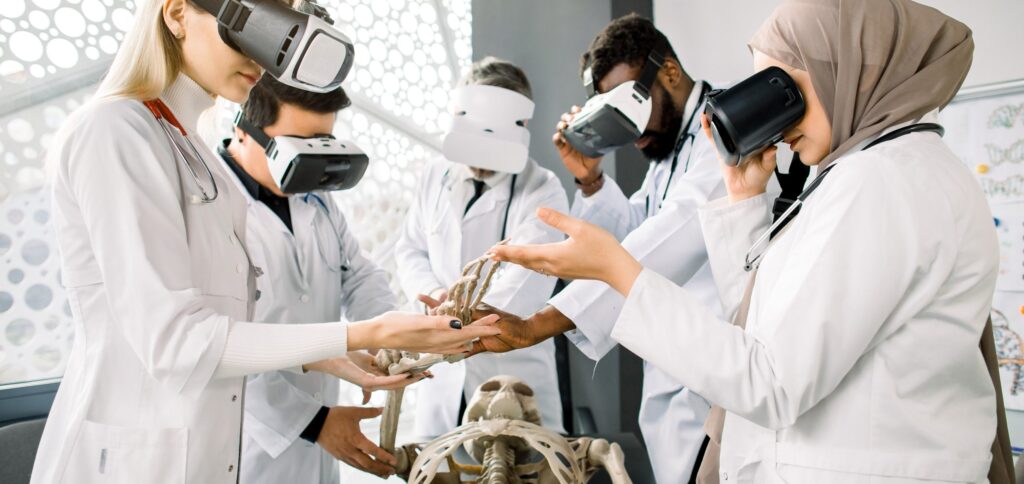

Virtual Reality (VR) has moved far beyond the realm of emerging technology and is now recognized as a practical solution for modern workforce development. Across manufacturing, maintenance, logistics, healthcare, and corporate environments, organizations are under growing pressure to train employees faster, safer, and more effectively. Traditional methods like classroom instruction, printed manuals, or occasional hands-on sessions often struggle to meet these expectations. They can be expensive to scale, difficult to coordinate, and limited in their ability to create lasting engagement. Hence, an increasing number of companies are investing in immersive VR training systems.
Key Advantages of Immersive VR Training Systems
Immersive VR training systems places learners inside immersive digital environments where they gain knowledge through direct experience. Instead of only reading about a process or watching someone else perform it, employees can actively complete tasks, solve problems, and respond to realistic challenges. This hands-on approach improves understanding, builds confidence, and accelerates skill development while removing many of the risks and inefficiencies of conventional training methods.
One of the strongest business advantages of VR training is its positive impact on operational costs. Traditional in-person programs often require travel, lodging, instructor scheduling, equipment downtime, and dedicated training spaces. When teams are spread across multiple sites or countries, these costs rise quickly. VR allows organizations to deliver consistent training experiences to employees in different locations without bringing everyone to a central facility. This reduces travel expenses, lowers scheduling complexity, and minimizes disruption to normal operations.
Scalability is another major benefit. Once a VR training module is developed, it can be deployed repeatedly across departments, regions, or entire global workforces. Hundreds or even thousands of employees can access the same standardized content, ensuring consistency in procedures and expectations. This is especially valuable for companies that need to onboard large numbers of new hires or maintain regular compliance and safety certifications.
Immersive VR training systems also helps reduce the cost of using physical assets for training. In many industries, equipment is expensive, delicate, or mission-critical. Taking machinery offline for training can interrupt productivity, while allowing inexperienced workers to practice on live systems can create risk. Virtual replicas solve this challenge. Employees can learn machine operation, maintenance steps, troubleshooting processes, or safety protocols in a digital environment before interacting with real equipment. This reduces wear and tear, prevents accidental damage, and preserves production uptime.
Another key advantage of VR training is stronger knowledge retention. Passive learning methods often result in lower recall because participants absorb information temporarily without meaningful interaction. VR uses active participation to strengthen memory. Learners see, hear, move, and make decisions within the training environment, engaging multiple senses at once. This creates deeper cognitive connections and makes information easier to remember later. Because trainees are personally involved in the learning process, they are more likely to retain procedures accurately and apply them correctly in a real-life setting.
As industries continue to evolve, businesses need training systems that are efficient, measurable, and future-ready. Virtual Reality delivers all three. It reduces costs, improves retention, enhances safety, standardizes learning, and prepares employees through experience rather than theory alone.